Advanced Sepsis Management in Sangareddy for Life-Saving Critical Care
Rapid infection control and organ-support treatment for sepsis emergencies
Our sepsis care team provides fast diagnosis, precise antibiotics, and advanced ICU support to prevent organ failure and stabilize critically ill patients.

The Problem Patients Face During Sudden Sepsis or Severe Infections
Sepsis progresses rapidly and can become life-threatening within hours. Many patients struggle to access facilities with quick infection screening, timely antibiotics, and round-the-clock critical care. Delays in diagnosis or improper treatment can lead to septic shock, multi-organ failure, or long hospital stays. Families need a hospital equipped with advanced sepsis protocols and expert ICU teams.
Comprehensive Sepsis Management Services in Sangareddy
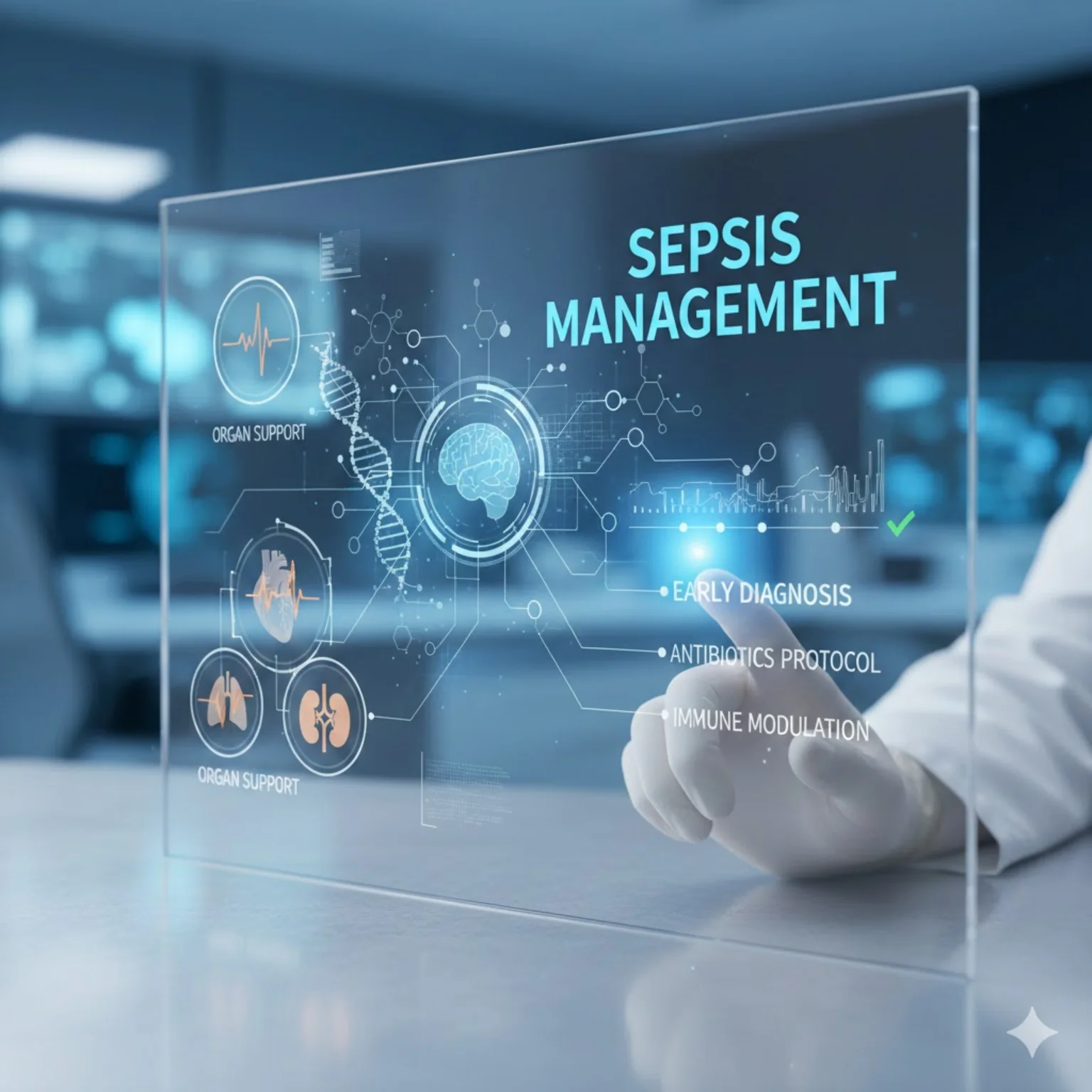
Our sepsis care protocol focuses on early diagnosis, rapid infection control, and continuous organ-support treatment. From blood cultures to fluid resuscitation and respiratory support, we ensure every step follows global sepsis guidelines for maximum survival and faster recovery.
Our sepsis management features include:
- Early infection detection via advanced diagnostics
- Rapid administration of precise antibiotics
- IV fluids and organ-support interventions
- Continuous vitals and blood pressure monitoring
- Support for respiratory or kidney complications
- 24/7 sepsis monitoring in ICU
Why Choose Our Sepsis Care in Sangareddy
- Fast Diagnosis ProtocolsEarly detection to stop sepsis progression.
- Expert Critical Care Team Skilled intensivists available 24/7.
- Advanced ICU SupportOrgan-support systems for unstable patients.
- Evidence-Based TreatmentGlobal sepsis guidelines followed strictly.
- High-Precision MonitoringReal-time tracking of vitals and infection markers.
- Trusted Emergency Facility Immediate care for life-threatening infections.
Our Sepsis Treatment Process – How It Works
- Initial Assessment : Evaluation of symptoms, vitals, and suspected infection sources.
- Diagnostic Testing : Blood cultures, lactate levels, and infection panels performed immediately.
- Immediate Treatment :Broad-spectrum antibiotics and IV fluids started without delay.
- Organ Support : Ventilator, dialysis, or cardiac support provided based on patient needs.
- Continuous Monitoring : Round-the-clock ICU observation until stabilization and recovery.
Get rapid, life-saving sepsis care with expert monitoring and advanced ICU treatment.

Dr Anvesh Reddy
Consultant - Laparoscopic Surgeon
MBBS, MS (General Surgery)
Experience : 10+ years

Dr Kotha Sruthi Reddy
MBBS, MS OBG
Infertility Specialist & Laparoscopic Surgeon
Experience : 10+ years

Dr Vinay Kumar
MBBS, MS (Ortho), OSM
Consultant - Orthopedic & Trauma care
Experience : 10+ years

Dr Harinath Reddy
MBBS, MD (General Medicine)
General Physician & Diabetologist
Experience : 10+ years

Dr Shashank Gupta K
MBBS, MD (Pediatrics)
Consultant - Pediatrician
Experience : 4+ years

Dr. Deepa Reddy
MBBS, MD (Radiology)
Consultant - Radiologist
Experience : 10+ years

Dr-palli-Shirin
M.S, M.Ch, Dr.N.B
Consultant – Plastic & Reconstructive Surgeon (Micro vascular & cosmetic surgeon)
Experience : 7+ years
Need Guidance? We’re Here for You
If you have questions about symptoms, treatment options, or which doctor to consult, our team is ready to assist you with clear, reliable medical information so you can make confident health decisions without worry.